Dark Spot Skincare Routine After an Interview

A cosmetic concern can deserve attention without becoming the measure of how an interview went—or what comes next.
The Interview Ended. The Skin Check Did Not.
Illustrative scenario; not a customer testimonial.
Picture this: an interview has ended, and a candidate sits outside the building with a notebook on her lap. She opens her phone to save a thought about an answer she wants to remember. Instead, the front-facing camera catches her attention, and she studies one lingering mark on her cheek. After a moment, she places the phone face down, picks up her pen, and returns to the notes.
That redirect is a useful place to begin a dark spot skincare routine. A cosmetic concern can be worth noticing, but it does not measure preparation, professional ability, or the quality of an interview conversation. The skin question and the interview question can remain separate.
The notebook still holds concrete next steps: an example she explained clearly, a question she may want to address in a follow-up email, or the name of the person she met. A skincare choice can belong in the same day without being asked to explain what the interview meant or what happens next.
Name the Appearance Concern Before Choosing a Product
A lingering color change can follow inflammation or injury, but general educational information cannot identify an individual mark from a mirror, photograph, or product description. That is why a post-breakout mark routine starts with observation instead of a quick label. Postinflammatory Hyperpigmentation
It also helps not to use “scar” as a catchall. The American Academy of Dermatology distinguishes acne scars from flat changes in skin color. A raised or indented area is not the same concern as a flat-looking patch of lingering color, and an appearance-focused serum should not be presented as filling or treating structural scars. Acne scars: Signs and treatment
This distinction is meant to make shopping simpler, not turn a mirror into a diagnostic tool. If an area is unclear, changing, raised, or indented, seek appropriate evaluation. If the concern appears to be lingering color, a cosmetic-care choice may be a reasonable next question to explore.

A Five-Step Dark Spot Skincare Routine
A short sequence can keep an appearance concern from becoming a pile of disconnected purchases. It does not promise a particular result; it simply gives each part of the decision a place.
- 1. Notice what you are seeing. Ask whether the concern appears flat in color or whether it is unclear, raised, or indented.
- 2. Keep daytime sun protection separate. During outdoor exposure, use sun-safety measures such as shade, protective clothing, and sunscreen rather than treating an appearance-focused serum as sunscreen. Sun Safety
- 3. Review current product details and directions before deciding whether a product fits your own care.
- 4. Choose one daily-care step aligned with the appearance goal instead of introducing a crowded group of new products at once.
- 5. Seek appropriate evaluation if the concern is unclear, changing, raised, or indented.

Keep the Routine Focused, Not Overloaded
A focused routine leaves room to notice what you actually chose and why. For example, uneven skin tone care may be the goal when a person is noticing a lingering patch of color rather than looking for coverage for one meeting or photograph. Concealer and cosmetic care can have different jobs: one may be useful for the day in front of you, while the other is a separate appearance-care choice.
Keeping the choice modest also helps remove an artificial deadline. There is no need to tie a skincare purchase to an interview, a photo, a weekend, or a major event. The useful action is often more ordinary: read the information, decide whether the stated focus matches the concern you can name, and keep the rest of the day moving.
This approach does not ask every product to solve every appearance question. It creates one visible place for skincare alongside the other basics that make up a real morning or evening.
Where an Appearance-Focused Serum May Fit
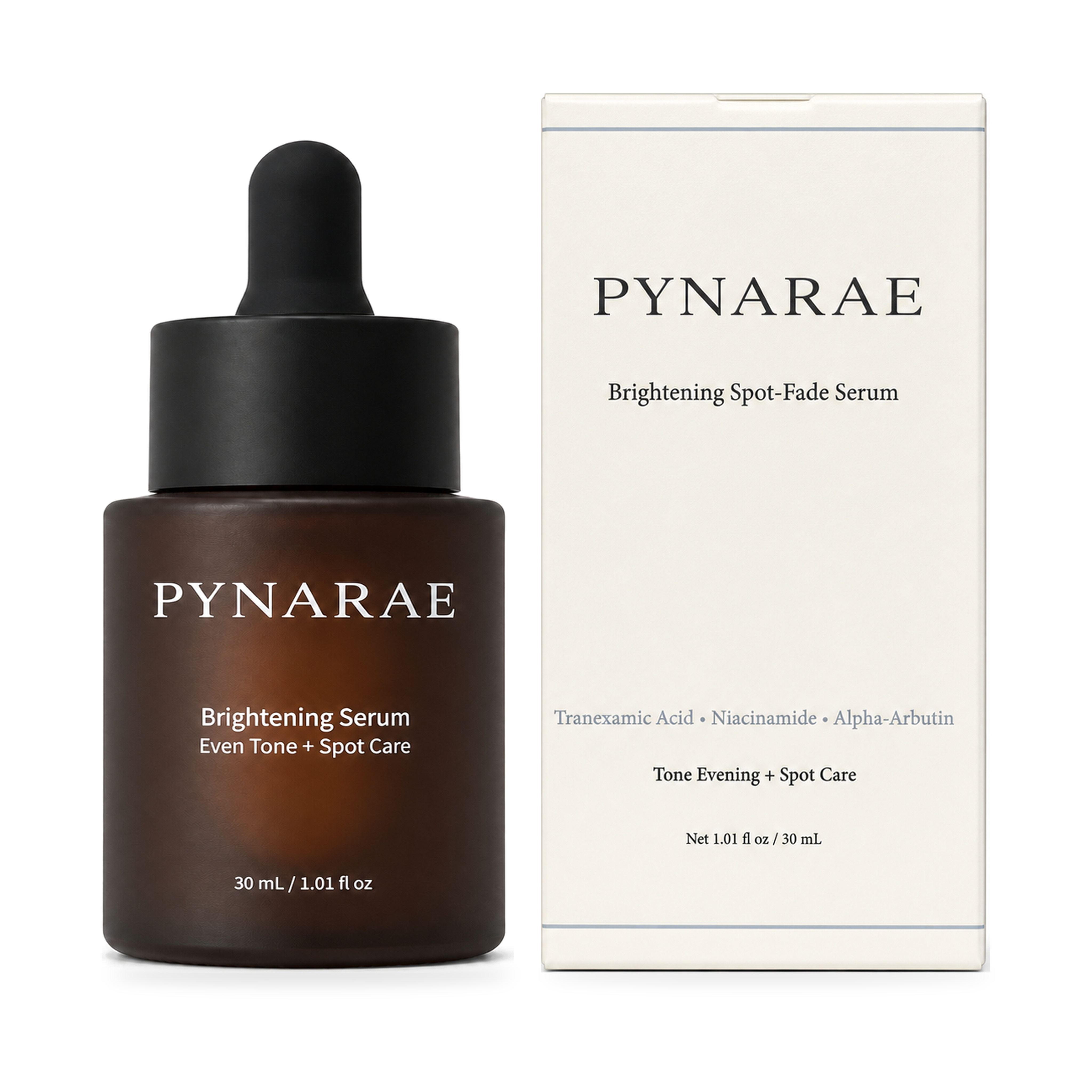
PYNARAE Brightening Spot-Fade Serum is positioned for the appearance of dark spots, dullness, and uneven skin tone. For a shopper looking for an appearance-focused dark spot serum, that stated focus offers a straightforward way to assess whether the product belongs in a daily-care plan.
The product link is a place to review the current details and directions before choosing: PYNARAE Brightening Spot-Fade Serum. The decision can remain practical: choose it because its appearance-focused positioning matches the concern you want to address, not because it is expected to change normal skin texture or determine how an interview goes.
Daily tone care can be a small act of attention rather than a larger promise. It may mean choosing one product page to read carefully, keeping daytime sun protection in its own lane, and leaving space for the non-skincare parts of the day.
Return to the Notes
Back outside the interview building, the candidate may still notice the mark in the phone screen. She can also return to the notebook: the answer that felt most useful, the point she wants to clarify, and the next item on her calendar.
That is a realistic place for skincare to sit. An appearance-care choice can be part of a person’s day without becoming evidence of competence, confidence, or future success. Name the concern, make one fitting product decision, and let the interview stand on its own terms.
Sources
Frequently Asked Questions
Is PYNARAE Brightening Spot-Fade Serum sunscreen?
No. PYNARAE Brightening Spot-Fade Serum is positioned for the appearance of dark spots, dullness, and uneven skin tone; it is not presented as sunscreen. Keep daytime sun protection as a separate part of your routine, using practical measures such as shade, protective clothing, and sunscreen when outdoors.
Can a dark spot skincare routine treat acne scars?
No. A cosmetic routine for the appearance of dark spots should not be presented as treatment for acne scars or as a way to fill indentations. Flat changes in color and structural concerns are not interchangeable, so an unclear, raised, indented, or changing area deserves appropriate evaluation.